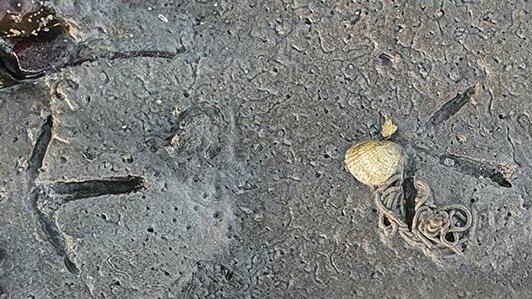
Bird Tracks Course starting June 3, 2027 in Elsnig
Details for this training programme
Modules
| Module number | Start | End |
|---|---|---|
| 1 | Thursday, 06/03/27 18:00 | Sunday, 06/06/27 15:00 |
| 2 | Thursday, 08/26/27 18:00 | Sunday, 08/29/27 15:00 |
| 3 | Thursday, 02/03/28 18:00 | Sunday, 02/06/28 15:00 |
Venue
Tipiplatz der Wildnisschule Heidefeuer
Board & Overnight
Accommodation is in a guesthouse. Accommodation and meals cost an average of 145 euros per long weekend.
Teachers
-

Jörn Kaufhold
im Team seit 2010
-

Andreas Wenger
Partner seit 2026
About this Class
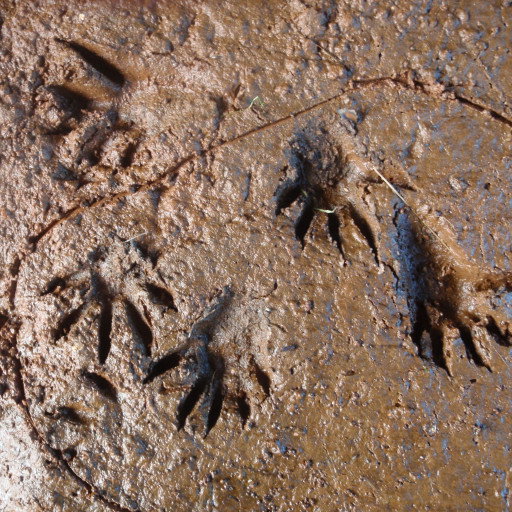
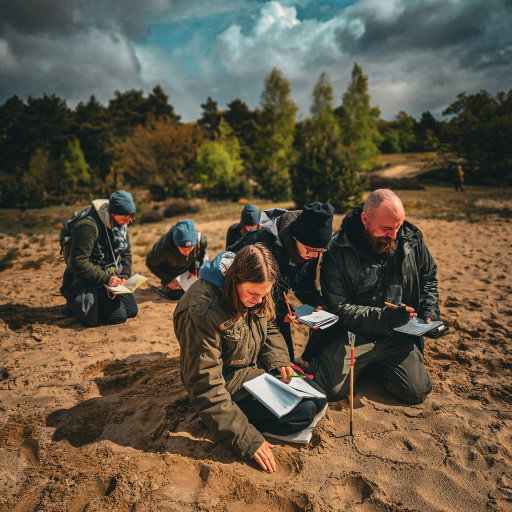
Birds leave behind a wide variety of tracks and signs that reveal much about their lives and their connection to their habitat. In this course, you will delve into the world of bird tracks and learn to recognize and interpret footprints, gaits, feeding marks, and other clues. Along the way, you will combine careful observation with knowledge of bird anatomy, ecology, and the language of birds. The course takes you through three seasons and selected landscapes with different conditions for reading tracks.
Contents
Bird Anatomy and Gaits
You will explore bird anatomy and learn how different body shapes and ways of moving are reflected in their tracks. Analyzing gaits helps you identify footprints with confidence and understand track patterns.
Identifying Tracks and Signs
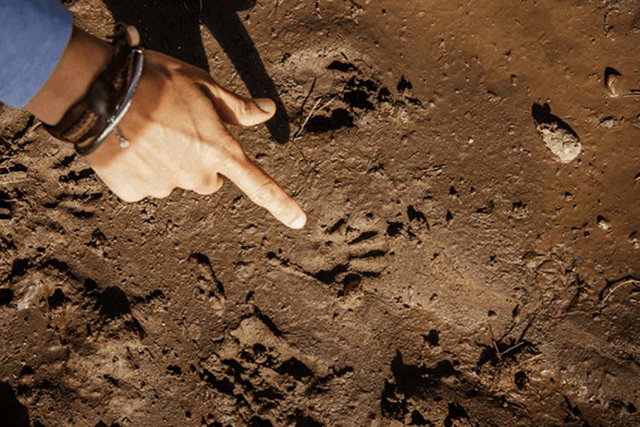
The focus is on identifying and interpreting footprints, feeding traces, droppings, pellets, and regurgitated pellets. You will practise combining different clues and drawing conclusions about birds’ activities.
The Language of Birds
Bird calls and songs are also part of exploring their signs. You will broaden your perspective on birds and learn to perceive their signals in the context of their behaviour and surroundings.
Landscape and Ecological Relationships
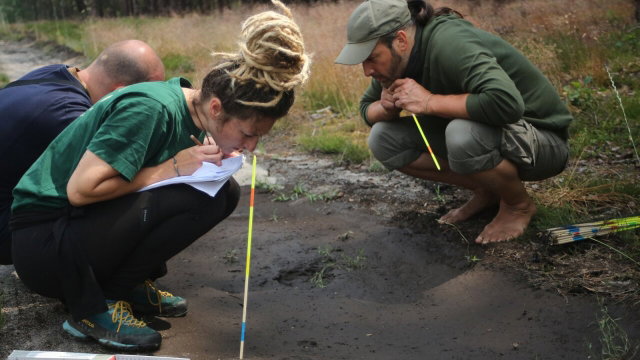
Reading bird tracks takes you deep into each landscape. Over the course of three seasons, you will look for tracks and signs in three selected landscapes and on different substrates. In this way, you will connect individual observations with the habitats and ecological relationships in which birds live.
Perception and Interpretation
The course provides knowledge and techniques that will enable you to identify and interpret tracks and signs. In doing so, you will develop your powers of observation, reasoning, imagination, and intuition. Individual clues come together to tell stories about how birds live and how they are connected to their habitat.
Possible Applications
The skills acquired can be used in research, environmental education, nature conservation, hunting and monitoring, as well as in personal exploration of nature.
Structure
The course comprises a total of 12 days and is divided into three consecutive modules. Each module runs from Thursday to Sunday. Learning and practical experience take place both during the training blocks and through assignments between modules.
The course runs from summer to winter and takes you through three seasons and three selected landscapes. Each training period runs from 18:00 on the first day to 15:00 on the last day of the respective module.
Central Elbe Module
04880 Trossin, Saxony/Germany
Tipi site of the Heidefeuer Wilderness School
The landscape here between the Mulde and Elbe rivers is gently hilly, forested, and sandy. This sparsely populated area has numerous oak and pine forests, alder swamps, and meadows.
Coast Module
Nordstrand, near Husum, Germany
The Wadden Sea on the North Sea coast offers excellent conditions for reading tracks and signs, especially during bird migration.
Mountains Module
Kasperske Hory in the Czech Republic
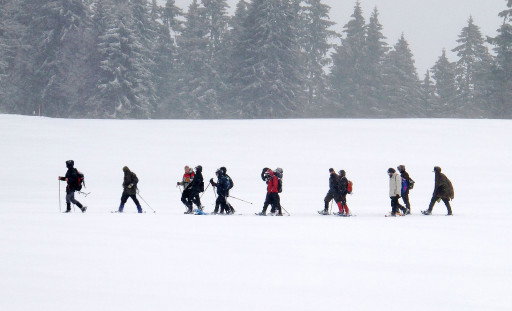
The Bohemian Forest is a 120 km long and 50 km long mountain range right on the German-Czech border, which is considered fairly snow-reliable in winter. Kasperske Hory lies within the Šumava Protected Landscape Area.
Prerequisites
The most important prerequisite is your interest in and passion for the course content and objectives. If you are fascinated by bird tracks and often find yourself wondering which bird left a particular track, this course is right for you.
If you are currently enrolled in another education or training program, please complete it first so that you can then dedicate sufficient time to this course.
Board & Overnight
Accommodation is in a guesthouse. Accommodation and meals cost an average of 145 euros per long weekend.
Certificate
Upon successful completion, Wildnisschule Wildniswissen issues a certificate.
Reviews
WildNet.Earth Review Policy
Each rating result ranges from 1 to 10. The overall rating for a class is calculated by adding up all the ratings submitted and dividing them by the number of ratings. We use a weighted system: more recent ratings have a greater influence on the overall result.
Participants can also submit sub-ratings for important class areas – such as organizer communication, class management, content & learning progress, procedure & implementation, venue, catering, and accommodation. Sub-ratings and overall ratings are assigned independently of each other and are not necessarily directly related.
Participants can submit a review if they have taken part in a class via WildNet.Earth – even if they have not completed the class in full. In addition, participants can verify themselves and also write reviews even if they have not booked via WildNet.Earth. Changes to reviews that have already been submitted can only be made via WildNet customer service.
To prevent bias, WildNet.Earth uses processes that identify fake or unreliable reviews. Such content will be deleted and measures may be taken against those responsible. Suspicious posts can be reported to customer service by anyone at any time.
We publish both positive and negative reviews, unless they contain or refer to:
- Politically sensitive content
- Advertising
- Illegal activities
- Personal or sensitive data (e.g., phone numbers, email addresses)
- Insults, obscene language, sexualized content, hate speech, discrimination, threats, or violence
- Spam or obviously fake content
- Identity theft
- Any violation of our rating guidelines
Guidelines and standards for reviews
These guidelines ensure that reviews on WildNet.Earth remain relevant, fair, and respectful—without restricting freedom of expression.
Contributions should have a clear connection to the class or experience and help other participants make an informed decision. Personal attacks, religious or political statements, advertising, or support requests (to the organizer or WildNet.Earth) do not belong in reviews and will be removed.
Posts must be suitable for a global audience. Obscenities (even in creative writing) and content that contains hate, discrimination, violence, sexual depictions, or illegal activities are not permitted.
All content must be authentic, independent, and unbiased. Organizers and their partners may not create reviews on behalf of their participants or offer incentives for reviews. Attempts at manipulation (e.g., negative reviews against other organizers) will not be tolerated.
Personal data of third parties may not be published. Copyrights must be observed—published content, especially images, may only be used if the corresponding rights have been obtained.
The opinions expressed are solely those of participants and class providers. WildNet.Earth accepts no liability for reviews or responses. WildNet.Earth acts as a distributor, not as a publisher of content.
Reviews are sorted according to recency and other relevance criteria (e.g., language, reviews with text, etc.). Additional sorting options may be available.
Lehrgang Vogelspuren
Share your experience report
Thank you for sharing your experiences. Your feedback helps other participants and supports the organizers in quality assurance.
A quick login is required to submit a review.
This ensures that only actual participants submit reviews, which increases the relevance of the reviews.
Still have questions?
Reach out and we will connect you directly with the organizing team so you can clarify every detail before booking.
More classes from this school

Similar classes in the Tracking category






About the Organizer
Wildnisschule Wildniswissen
Wildniswissen – wilderness school since 1995! Wildniswissen offers wilderness tours, wilderness courses, and training programs in wilderness education and tracking. Our work is based on Indigenous traditions that honor the Earth and are closely connected to local ecosystems. We see the Earth as a living organism and advocate a shift in values toward a regenerative partnership with our planet. In doing so, we foster deep connections with nature, with our fellow human beings, and with ourselves. Guided by Indigenous values and the teachings of our elders, we accompany people of all ages and from all walks of life—and learn together how to feel at home in nature.
ONE-YEAR WILDERNESS EDUCATION PROGRAM Part 1: The Foundations
THREE-YEAR WILDERNESS EDUCATION PROGRAM Part 2: Abundance
FOUR-YEAR WILDERNESS EDUCATION PROGRAM Part 3: Transformation
How it all began
The Wildniswissen Wilderness School was founded in 1995, when I, Wolfgang Peham, first introduced our work to the public with a weekend seminar.
In 2004, our first wilderness education training program took place in southern Germany.
In 2005, we added a training program in northern Germany for the first time.
In 2007, our first Wilderness Education Program Part II took place. Building on the first year, it deepens and expands the knowledge from Part I over a further two years.
In 2007, we conducted a training course for the rangers of Kalkalpen National Park in Austria. It consisted of three modules from our wilderness education program.
In 2009, in cooperation with the national park, our first wilderness education program in Austria took place.
In 2010, our Wilderness Education Program Part III was offered for the first time.
In 2011, due to high demand, two programs ran simultaneously in northern Germany for the first time.
In 2012, in cooperation with the Drei Eichen Environmental Center in Brandenburg, our first German-Polish Wilderness Education Program took place. Thanks to her strong contacts with the ministries on both sides of the Oder, Dr. Charlotte Bergmann, director of the environmental center, secured the support of both countries. Jörn Kaufhold, a graduate of our three-year training program who had spent many years working as a trainer in Russia, was married to a Slovak woman, and had been part of the team since 2010, was appointed to lead this bilateral project. He was supported by Alina Michalik and Slawomir Szenwald, who provided translation. German-Polish funding ended in 2015.
In 2016, our first German-language program in Brandenburg took place.
In 2016, our first Polish-language program in Poland took place.
In 2016, the Diakonie Baden-Württemberg commissioned us to run a wilderness education program for its professional staff.
In 2017, for the first time, we offered a program in Schleswig-Holstein at Naturparkzentrum Uhlenkolk, our new location near Mölln.
In 2019, we conducted a wilderness education program for the rangers of Thayatal National Park in Austria.
In 2022, in cooperation with Thayatal National Park, our first Austrian-Czech Wilderness Education Program took place. Thanks to her strong contacts with the ministries on both sides of the Thaya, Mag. Claudia Waitzbauer, responsible for nature and environmental education at the national park, secured the support of both countries. Jörn Kaufhold, who had also led our German-Polish program, was once again appointed to lead this bilateral project.
Quality management
As deputy head of a training department at an airline, I was also involved in developing training syllabi and quality assurance. I was able to bring this knowledge and expertise to the wilderness school, helping us establish a quality assurance system.
In addition to their wilderness education qualifications, all the team members who lead a wilderness education program with us have completed at least one year of internal training.
Who takes part
I am delighted that our participants really do come from “all walks of life.” They range from a 17-year-old Waldorf school student to a 60-year-old retired banker, from someone who spent years living under a bridge to a university professor, and from someone currently unemployed to a businesswoman—to give you an idea of the range.
The most important prerequisites are interest and passion.
Ulrike Fokken describes this in her book “Wildnis wagen!” (Dare to Venture into the Wilderness!), Ludwig Verlag, 2014:
...Twenty-three women and men have come with me to the Wilderness Education I course at the Wildniswissen Wilderness School. An insurance manager, six female educators, three male educators, a carpenter and a gardener, a doctor of biology with their own research laboratory in the chemical industry, an investment fund manager, an administrative clerk from a small town in Swabia, a few young people between school and their careers, a graphic designer, and others who feel at home in nature and want to learn more about it…
How we are regarded
“...Last year, more than 1,200 children attended programs for school classes, and around 400 adults took one of the courses between Denmark and South Tyrol. Wolfgang (..Peham) and his colleagues are hired by mountaineering associations, national parks, and municipal organizations, among others...”
Jochen Schilk, Das Wilde Leben, OYA 02/2010“Peham is one of the pioneers of wilderness education, with decades of experience—something like the German Jon Young.”
Andreas Weber, Mehr Matsch!, Ullstein Verlag 2011“...Coyote Teaching—the teaching of the coyote. The unusual name simply has to do with the fact that wilderness education comes from the USA. There, people such as Jon Young and Tom Brown developed it as Wilderness Awareness, and it was then brought to Germany by the pioneer Wolfgang Peham...”
Ulrike Fokken, Wildnis wagen!, Ludwig Verlag 2014
Participant testimonials
“The wilderness education course showed me how genuine learning can work. After school and during a superficial course of study, this was the turning point that led me to try these new approaches for myself and take the initiative to learn independently. The course put a lot of things right and restored my joy in discovery and moving forward.”
Marko Grunz“I learned not only how to help other people connect with nature, but above all that I myself am part of it, connected with everything that lives. Knowing this rationally is one thing, but being able to feel it with every breath, out in nature and deep in my heart, is a wonderful gift. This has changed a great deal, not only in my studies, but in my whole life. Thank you!”
Elke Loepthien“Finally, a professional development course where theory and practice aren’t separated by a deep chasm. Where learning is useful—even in everyday life. And where motivation grows in proportion to learning.”
Jörn Kaufhold“I learned a lot during the one-year training program and found the weekends particularly intensive. The sessions that touched me most were those about the philosophy of Indigenous peoples, the spirit behind everything, and spirituality. Ideas came up that—as it felt—were already inside me and could now finally be thought through. I also found the attention exercises, the ‘sit spot,’ and the ‘way of learning,’ including the homework, greatly enriching; they have had a lasting effect on my everyday life and my perception.”
Jantje Blatt“The year opened up new paths for me, gave me new insights, and offered new approaches for my journey. It brought me closer to the Earth. I met people I would not normally have met, and tried things I would not normally have done. I learned not to let my mind wander off and leave my heart behind.”
Henrike Scholz
Wildniswissen – Wildnisschule seit 1995! Wildniswissen bietet Wildnistouren, Wildniskurse und Lehrgänge in Wildnispädagogik sowie im Fährtenlesen an. Unsere Arbeit basiert auf indigenen Traditionen, die die Erde wertschätzen und eng mit lokalen Ökosystemen verbunden sind. Wir betrachten die Erde als lebendigen Organismus und setzen uns für einen Wertewandel im Sinne einer regenerativen Zusammenarbeit mit unserer Erde ein. Dabei fördern wir tiefe Verbindungen zur Natur, zu unseren Mitmenschen und zu uns selbst. Geprägt von indigenen Werten und den Lehren unserer Ältesten begleiten wir Menschen jeden Alters und aus allen gesellschaftlichen Bereichen – und lernen gemeinsam, in der Natur zu Hause zu sein.
EINJÄHRIGE WILDNISPÄDAGOGIK Teil 1 Die Grundlagen
DREIJÄHRIGE WILDNISPÄDAGOGIK Teil 2 Die Fülle
VIERJÄHRIGE WILDNISPÄDAGOGIK Teil 3 Die Transformation
Wie es dazu kam
Die Geburtsstunde der Wildnisschule Wildniswissen war im Jahr 1995, als ich, Wolfgang Peham, mit einem Wochenendseminar zum ersten Mal an die Öffentlichkeit ging.
In 2004 fand unser erster Lehrgang Wildnispädagogik in Süddeutschland statt.
In 2005 kam dann zum ersten Mal auch ein Lehrgang in Norddeutschland dazu.
In 2007 fand unser erster Lehrgang Wildnispädagogik Teil II statt, der aufbauend auf das erste Jahr noch mal 2 Jahre das Wissen von Teil I vertieft und erweitert.
In 2007 haben wir für die Ranger des Nationalparks Kalkalpen in Österreich eine Schulung durchgeführt. Inhalt waren drei Module von unserem Lehrgang Wildnispädagogik.
In 2009 fand dann in Kooperation mit dem Nationalpark unser erster Lehrgang Wildnispädagogik in Österreich statt.
In 2010 fand zum ersten Mal unser Lehrgang Wildnispädgogik Teil III statt.
In 2011 fanden, aufgrund der großen Nachfrage, zum ersten Mal 2 Lehrgänge parallel in Norddeutschland statt.
In 2012 fand in Kooperation mit dem Umweltzentrum Drei Eichen in Brandenburg, unser erster Deutsch-Polnischer Lehrgang Wildnispädagogik statt. Dank ihrer guten Kontakte zu den Ministerien auf beiden Seiten der Oder hat es Frau Dr Charlotte Bergmann, Leiterin des Umweltzentrums, geschafft, sich die Unterstützung beider Länder zu sichern. Jörn Kaufhold, Absolvent unserer 3-jährigen Ausbildung, lange in Russland als Trainer unterwegs, mit einer Slowakin verheiratet und seit 2010 im Team wurde dann mit der Leitung dieses bilateralen Projektes betraut. Unterstützt wurde er dabei von Alina Michalik und Slawomir Szenwald, die übersetzt haben. In 2015 lief die Deutsch-Polnische Förderung aus.
In 2016 fand unser erster deutscher Lehrgang in Brandenburg statt.
In 2016 fand unser erster polnischer Lehrgang in Polen statt.
In 2016 wurden wir von der Diakonie Baden-Württemberg beauftragt, einen Lehrgang Wildnispädagogik für ihr Fachpersonal durchzuführen.
In 2017 bieten wir zum ersten Mal im Naturparkzentrum Uhlenkolk, unserem neuen Standort bei Mölln, einen Lehrgang in Schleswig-Holstein an.
In 2019 haben wir für die Ranger des Nationalparks Thayatal in Österreich einen Lehrgang Wildnispädagogik durchgeführt.
In 2022 fand in Kooperation mit dem Nationalpark Thayatal, unser erster Österreichisch-Tschechischer Lehrgang Wildnispädagogik statt. Dank ihrer guten Kontakte zu den Ministerien auf beiden Seiten der Thaya hat es Frau Mag. Claudia Waitzbauer, zuständig für die Natur- und Umweltbildung im Nationalpark, geschafft, sich die Unterstützung beider Länder zu sichern. Jörn Kaufhold, der auch schon unseren deutsch-polnischen Lehrgang geleitet hat, wurde wieder mit der Leitung dieses bilateralen Projektes betraut.
Qualitätsmanagement
Als stellvertretender Leiter der Trainingsabteilung einer Fluggesellschaft hatte ich auch mit dem Erstellen von Trainingssyllabi und mit Qualitätssicherung zu tun. Dieses Wissen und diese Kompetenz konnte ich in die Wildnisschule mit einbringen und hat uns geholfen, ein Qualitätssicherungssystem zu etablieren.
Alle Teamer, die bei uns einen Lehrgang Wildnispädagogik leiten, haben über ihren wildnispädagogischen Abschluss hinaus mindestens ein Jahr internes Training hinter sich.
Wer daran teilnimmt
Ich freue mich sehr über die Tatsache, dass wirklich Leute „from all walks of life“ zu den Teilnehmern gehören. Vom 17 jährigen Waldorfschüler bis zum 60 jährigen pensionierten Banker, von einem der jahrelang unter einer Brücke gelebt hat bis zum Hochschulprofessor, von einem im Moment Arbeitslosen bis zur Unternehmerin, um mal die Bandbreiten ein wenig zu beschreiben.
Die wichtigsten Voraussetzungen sind Interesse und Leidenschaft.
Ulrike Fokken beschreibt das in ihrem Buch „Wildnis wagen!“, Ludwig Verlag 2014, so:
...Mit mir sind 23 Frauen und Männer zum Kurs Wildnispädagogik I der Wildnisschule Wildniswissen gekommen. Eine Versicherungsmanagerin, sechs Erzieherinnen, drei Erzieher, ein Tischler und ein Gärtner, ein Doktor der Biologie mit eigenem Forschungslabor in der Chemieindustrie, ein Kapitalfondsmanager, eine Sachbearbeiterin aus einer schwäbischen Kleinstadt, ein paar junge Leute zwischen Schule und Beruf, eine Grafikerin und andere, die sich in der Natur zu Hause fühlen und mehr von ihr erfahren wollen…
Wie wir wahrgenommen werden
"...Im vergangenen Jahr besuchten mehr als 1200 Kinder die Programme für Schulklassen und rund 400 Erwachsene einen der Kurse zwischen Dänemark und Südtirol. Wolfgang (..Peham) und seine Mitarbeiter werden unter anderem von Alpenvereinen, Nationalparks und kommunalen Einrichtungen gebucht..."
Jochen Schilk, Das Wilde Leben, OYA 02/2010"Peham ist einer der Pioniere der Wildnispädagogik mit jahrzehntelanger Erfahrung, geradezu so etwas wie der deutsche Jon Young."
Andreas Weber, Mehr Matsch!, Ullstein Verlag 2011" ...Coyote Teaching – die Lehre des Kojoten. Der ungewöhnliche Name hat schlicht damit zu tun, dass die Wildnispädagogik aus den USA kommt. Dort wurde sie von Menschen wie Jon Young und Tom Brown als Wilderness Awareness entwickelt und dann von Wolfgang Peham als Pionier nach Deutschland gebracht..."
Ulrike Fokken Wildnis wagen!, Ludwig Verlag 2014
Teilnehmerstimmen
"Der Kurs Wildnispädagogik hat mir gezeigt, wie echtes Lernen funktionieren kann. Nach Schule und während eines oberflächlichen Studiums war dies die entscheidende Wende, um für mich selbst diese neuen Ansätze auszuprobieren und Eigeninitiative für selbst bestimmendes lernen zu übernehmen. Dieser Kurs hat einiges zurechtgerückt und in mir die Freude am Entdecken und Vorwärtsschreiten zurückgegeben."
Marko Grunz"Ich hab nicht nur gelernt, wie ich anderen Menschen Natur nahe bringen kann, sondern vor allem, dass ich selbst ein Teil davon bin, mit allem was lebt verbunden. Dies rational zu wissen, ist eine Sache, aber es mit jedem Atemzug draußen in tiefstem Herzen spüren zu können, ist ein wunderbares Geschenk. Nicht nur für mein Studium hat sich dadurch vieles verändert, sondern für mein gesamtes Leben. Danke!"
Elke Loepthien"Endlich eine Fortbildung, wo Theorie und Praxis nicht durch einen tiefen Graben getrennt sind. Wo Lernen etwas bringt – auch im alltäglichen Leben. Und wo die Motivation mit dem Lernen proportional wächst."
Jörn Kaufhold"Ich habe während der einjährigen Weiterbildung viel gelernt und insbesondere die Wochenenden als eine sehr intensive Zeit wahrgenommen. Am meisten beührt haben mich die Einheiten, in denen es um die Philosophie der Naturvölker, um den Geist hinter allem, um Spiritualität ging. Da wurden Gedanken angesprochen, die - wie es sich anfühlte - schon in mir drin waren und jetzt wirklich gedacht werden durfte. Als eine große Bereicherung habe ich auch die Aufmerksamkeitsübungen, den „Sitzplatz“ und die “Art des Lernens“, auch durch die Hausaufgaben, empfunden, die meinen Alltag und meine Wahrnehmung nachhaltig verändert haben."
Jantje Blatt"Das Jahr hat mir neue Wege eröffnet, neue Einblicke gegeben und neue Ansätze für meinen Weg gegeben. Es hat mich der Erde nähergebracht. Ich habe Leute kennengelernt, die ich normalerweise nicht kennengelernt hätte und ich habe Dinge ausprobiert, die ich normalerweise nicht gemacht hätte. Ich habe gelernt, den Geist nicht davon ziehen zu lassen und das Herz dabei zurückzulassen."
Henrike Scholz
Hundreds more classes in 30+ categories
Not found what you are looking for yet? Discover many more classes in our class finder.
Legal
Dates
Dates
1350 €
June 3, 2027