Wilderness Education Course + Kids
Highlights
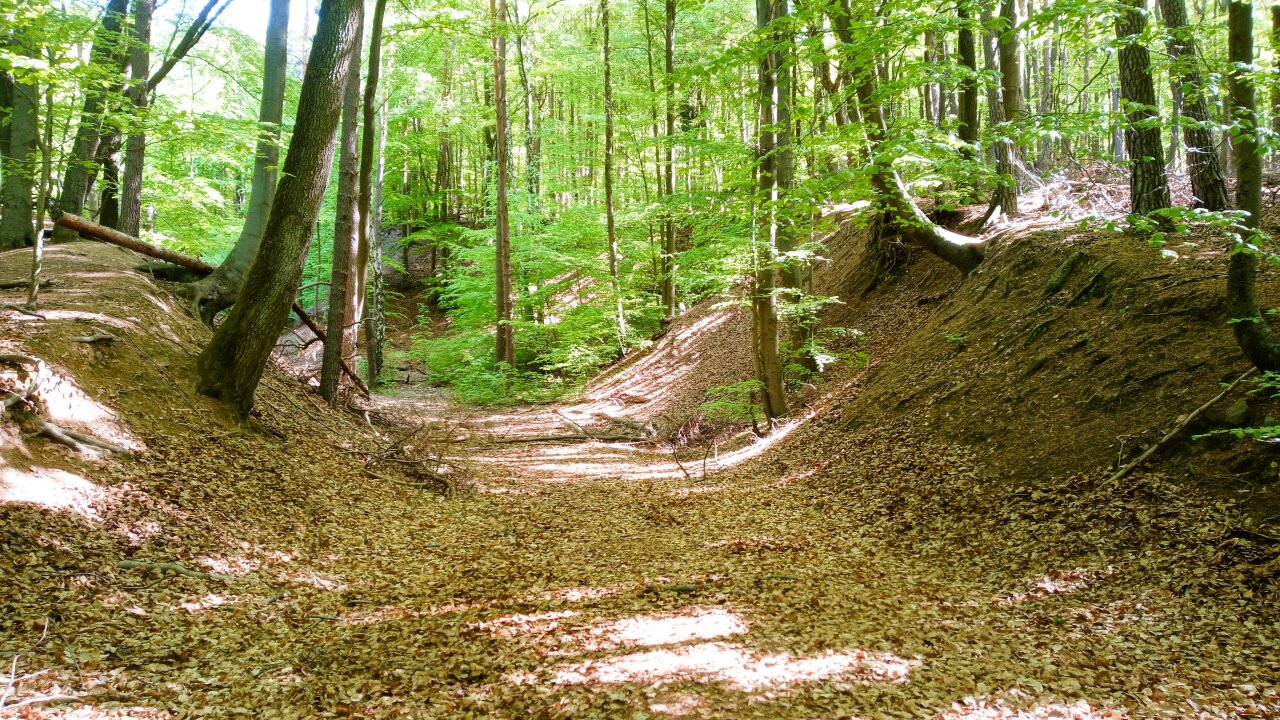
A few impressions to give you a feel for this class.
About this Class
Wilderness Education Course
This training course is intended for everyone who feels drawn to the topics outlined below. What makes this course special, however, is that I would like to offer you the opportunity to bring your children along. This is not compulsory, merely an option. Those who travel alone are just as warmly welcome.
“Wilderness” and “nature” are terms that are not known to peoples who lived and live in and with nature. For them, there is no separation between humans and nature—people are part of all creation, and everything is connected. For this reason, they also make no linguistic distinction between the two. They are native to the “wilderness.” Our ancestors also walked these ancient paths, so we, too, still carry this deep connection within us. For most people, however, it lies hidden, and we must first find our way to it.
This wilderness education course will give you the skills to rediscover and strengthen your own connection with nature, as well as the foundations and tools to help other people have this elemental experience.
Wilderness education did not learn its teachings and teaching methods in our classrooms, but from Indigenous cultures. This teaching approach is known as “Coyote Teaching.” The teaching and learning processes are often so subtle that they are not even perceived as instruction. The focus is always on personal experience and discovery. We awaken curiosity, play, sing, dance, read animal tracks, tell and listen to stories, sharpen our senses, perception, and mindfulness, and strengthen community and respect for all the beings around us.
Wilderness education is therefore not just an occupation or profession, but rather an inner attitude that fills practitioners with curiosity, authenticity, deep connection, respect, and mindfulness.
Family-friendly wilderness education training
Why bring children?
When I first started spending several days away from home to pursue my wilderness training, I found it difficult to leave my then three-year-old daughter behind. Although I was fortunate to know that she was in good hands with my husband, taking that step was never easy for me.
I was fortunate to have a reliable partner and, for my daughter, her familiar dad to look after her. For other parents, however, it may be more difficult to find suitable childcare, or they might like the opportunity for their child to share in this time in the wilderness.
Children are also an integral part of our society. They are inspiring and creative, and able to fill the world with wonder and curiosity. In this way, they can be role models for us and draw us along with their enthusiasm and energy.
Conversely, as part of the course, children have the opportunity to experience nature and the wilderness firsthand, engage all their senses, broaden their perception, and experience appreciation for community. They will feel that there is more to life than our four walls, artificial playgrounds, phones, computer games, social media, and classrooms. Depending on their age, they will learn to step away from everyday life and routines, move and play freely outdoors, and reconnect with their childlike side.
How does it work?
While you, as participants, are registered in advance for all modules and have therefore also paid the course fee, children and their respective accompanying adults can register for individual modules. A child can therefore attend all modules or just some of them. This allows you to plan flexibly.
Children may take part in all activities and will be actively included. They will sometimes be offered alternative activities. They may also opt out if they do not feel like participating. It is important to note that I am not responsible for supervising the children, and childcare must be organized by the participants themselves. It would be a good idea for at least two accompanying adults per module to be found among all the participants (from the participants’ family or circle of friends). They can keep an eye on the children during the learning sessions and serve as their point of contact. These accompanying adults do not pay a course fee; they only cover their costs for the space and meals. Provided this does not interfere with childcare, they may also take part in all learning sessions.
Why don’t I provide childcare workers? There are two reasons: first, these people would have to be paid, which would mean additional costs for you. Second, these childcare costs would vary from module to module, since the number of children brought along may differ each time—making the additional costs difficult for you to predict.
Available dates
Contents
- Core routines for connecting with nature
- Training all the senses, strengthening perception
- Survival basics
- Dealing with natural hazards
- Navigation
- Nature crafts
- Knowledge of plants
- Birds and bird language
- Introduction to tracking, mammals
- Nature mentoring, Coyote Teaching: experiencing a connection with nature and supporting others in developing one
- Cycles
- Introduction to flora, fauna, and ecological relationships
- Gratitude, mindfulness, and respect as the basis for a deeper connection
- Living in community
Structure
The course comprises six mandatory in-person modules, each lasting a weekend. Homework between modules helps deepen the content. I also offer monthly online meetings to encourage mutual exchange, strengthen the sense of community, and discuss questions and problems related to the topics. Participation in these virtual meetings is voluntary.
Prerequisites
Mental and physical health.
Packing List
Tent, tarp, hammock
Sleeping bag and sleeping mat (suitable for the weather)
Weatherproof or weather-appropriate clothing, sturdy footwear
Writing materials
Toiletries, medication, and other personal items
Board & Overnight
The courses take place mainly outdoors and partly in the seminar room.
Accommodation is in a tent, under a tarp, or in a hammock. There is a toilet and a shower.
The food is mainly vegetarian and organic. Breakfast, lunch, and dinner are provided. Please contact me if you have any intolerances or follow a special diet.
Certificate
The certificate confirming successful participation will be presented upon completion of all modules and homework assignments.
Reviews
WildNet.Earth Review Policy
Each rating result ranges from 1 to 10. The overall rating for a class is calculated by adding up all the ratings submitted and dividing them by the number of ratings. We use a weighted system: more recent ratings have a greater influence on the overall result.
Participants can also submit sub-ratings for important class areas – such as organizer communication, class management, content & learning progress, procedure & implementation, venue, catering, and accommodation. Sub-ratings and overall ratings are assigned independently of each other and are not necessarily directly related.
Participants can submit a review if they have taken part in a class via WildNet.Earth – even if they have not completed the class in full. In addition, participants can verify themselves and also write reviews even if they have not booked via WildNet.Earth. Changes to reviews that have already been submitted can only be made via WildNet customer service.
To prevent bias, WildNet.Earth uses processes that identify fake or unreliable reviews. Such content will be deleted and measures may be taken against those responsible. Suspicious posts can be reported to customer service by anyone at any time.
We publish both positive and negative reviews, unless they contain or refer to:
- Politically sensitive content
- Advertising
- Illegal activities
- Personal or sensitive data (e.g., phone numbers, email addresses)
- Insults, obscene language, sexualized content, hate speech, discrimination, threats, or violence
- Spam or obviously fake content
- Identity theft
- Any violation of our rating guidelines
Guidelines and standards for reviews
These guidelines ensure that reviews on WildNet.Earth remain relevant, fair, and respectful—without restricting freedom of expression.
Contributions should have a clear connection to the class or experience and help other participants make an informed decision. Personal attacks, religious or political statements, advertising, or support requests (to the organizer or WildNet.Earth) do not belong in reviews and will be removed.
Posts must be suitable for a global audience. Obscenities (even in creative writing) and content that contains hate, discrimination, violence, sexual depictions, or illegal activities are not permitted.
All content must be authentic, independent, and unbiased. Organizers and their partners may not create reviews on behalf of their participants or offer incentives for reviews. Attempts at manipulation (e.g., negative reviews against other organizers) will not be tolerated.
Personal data of third parties may not be published. Copyrights must be observed—published content, especially images, may only be used if the corresponding rights have been obtained.
The opinions expressed are solely those of participants and class providers. WildNet.Earth accepts no liability for reviews or responses. WildNet.Earth acts as a distributor, not as a publisher of content.
Reviews are sorted according to recency and other relevance criteria (e.g., language, reviews with text, etc.). Additional sorting options may be available.
Lehrgang Wildnispädagogik + Kids
Rate your experience
Thank you for sharing your experiences. Your feedback helps other participants and supports the organizers in quality assurance.
A quick login is required to submit a review.
This ensures that only actual participants submit reviews, which increases the relevance of the reviews.
About the Organizer
wildniswärts
Durch die wildnispädagogischen Angebote von wildniswärts erleben Erwachsene und Kinder die Natur mit Sinnen, Seele und Verstand. Schwerpunkte sind die Ausbildung Wildnispädagogik, Survivaltrainings und Wildnistage, Teamevents und wildnispädagogische Angebote für Schulklassen.
Wir schärfen Wahrnehmung und Achtsamkeit, wecken Neugier, spielen, erzählen und hören Geschichten, stärken das Selbstbewusstsein und die Gemeinschaft sowie den Respekt gegenüber anderen und gegenüber allen Wesen, die uns umgeben. Dabei werden Inhalte zu Flora, Fauna und Ökosystemen vermittelt, aber vor allem auch Themen wie Survival, Orientierung und Naturhandwerk.
Wir nähern uns wieder dem "Einheimisch sein" in der Natur.
Hundreds more classes in 30+ categories
Not found what you are looking for yet? Discover many more classes in our class finder.