
Wilderness Education & Life Education Part I
About this Class
“When I sought a connection with nature, and especially through the further training, when I immersed myself in this connection with nature more deeply than I had previously thought possible, I experienced how many previously unnoticed aspects of my personality and self were also engaged by this connection. As a result, I was able to get to know myself anew in a special way.” (Julia, born 1988, graduate of Wilderness Education & Life Education Part I)
Welcome to the Wilderness and Life Education training program
With this training, we want to make you both strong—and vulnerable—for the many facets of a mindful life in and with nature.
It respectfully weaves together the wilderness knowledge of Indigenous peoples from around the world with European traditions and ways of life.
On a journey through the qualities of all four seasons, you will recognize that your actions on Earth have an impact.
Wilderness Education
Drawing on the knowledge and skills of Indigenous peoples, you will increasingly find your own roots and strengthen your connection to nature. You will learn to use your senses keenly, to listen inwardly and outwardly, and to trust your intuition. The insights you gain about yourself will enable you to make these tools accessible to other people or groups. In this way, you will open the door to their own wilderness and be an authentic “learning companion” to them on their journey through nature and life.
Life Education
means making the skills and experiences you have gained useful and practical for everyday life, whether in a community or on your own. You will learn to take care of yourself and act with full personal responsibility. You will understand what nourishes you and what weakens you. Through diverse exercises and rituals, you will gain important tools to grow into your full strength. This enables you to strengthen a community while also living in health, fulfillment, and balance.
Target group
People in educational and therapeutic professions; people working in teaching and instruction; people in the natural sciences; employees in forestry, leisure, or tourism; and people who would like to develop themselves through a sustainable, holistic way of life in and with nature.
This further training is recognized under the Rhineland-Palatinate Educational Leave Act (BFG). Recognition number: 7914/1909/25
Training, Part 1:
- 6 sequential modules of 4 days each, starting on Thursdays at 6:00 p.m.; Module 3 starts on Wednesday at 5:00 p.m. Modules end on Sundays at 2:00 p.m.; Module 3 ends at 3:00 p.m.
- Planning and carrying out a practical project during the training
- Individual coaching sessions with the team
- Completion of a nature and wilderness education internship and a Caretaker Day (recommended)
- Completion with the certificate “Training in Wilderness Education and Life Education.”
The teaching method
Inspired by Coyote Teaching, a loving and humorous form of “learning companionship” practiced by the Indigenous peoples of North America, we embark on a very sustainable and effective journey together. Situational alertness is always required, because nature, too, is a teacher with its own principles for teaching us about life.
The 5 foundations of the training
- Knowledge and skills of Indigenous peoples of the Earth
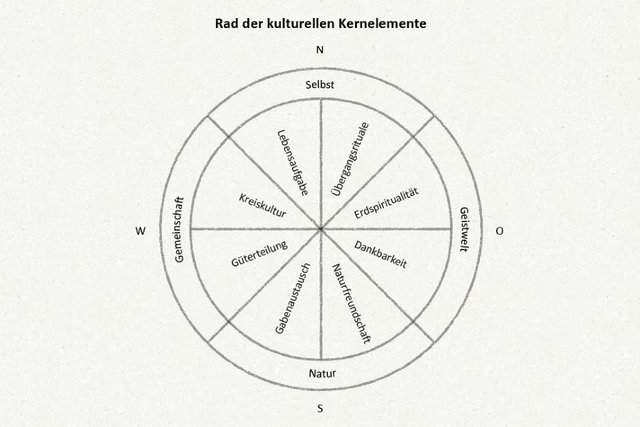
- Living and learning according to the Central European Life Compass/re:nature Compass, developed by U. Seghezzi
- Being a learning companion (applying Coyote Teaching in theory and extensive practice)
- Learning through personal experience
- Living and acting as part of a community
The training year at a glance
1. The beginning … is the foundation of everything
- Introduction to wilderness and life education
- Fundamental elements of life in the wilderness
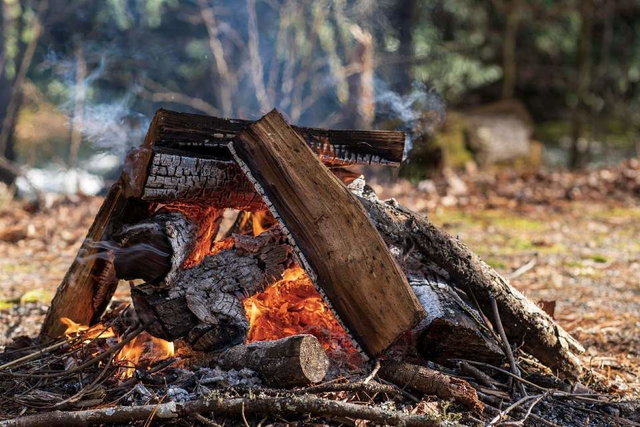
- Fire and fire-making with natural materials
- Awareness training – basics
- Using tools and learning about materials
- Getting to know one another and group formation processes
Location: Waldcamp Messersbacherhof/North Palatinate Date: Training begins: May 28–31, 2026
2. Awareness and mindfulness
- Advanced awareness training
- Introduction to the Life Compass/re:nature Compass
- Introduction to Coyote Teaching
- (Midsummer) ritual, the language of the forest, and the Baseline Symphony
- Wilderness routines and nature journaling
Location: Waldcamp Messersbacherhof/North Palatinate Date: Training Module 2: July 16–19, 2026
3. Life in the forest
- Organizing and setting up a wilderness camp
- Alternative cooking and food preparation methods/wild cuisine
- Getting to know and processing local wild herbs
- Community living and peacemaker principles
- Introduction to tracking and reading animal tracks
- Nonjudgmental observation
Location: Palatinate Forest/Donnersberg District Date: Training Module 3: September 16–20, 2026
4. Rights, responsibilities, and more
- Case studies from (wilderness) educational practice
- Liability issues and duty of supervision
- Nature conservation and species protection laws
- Natural laws and principles
- “Our Forest” and its inhabitants
Location: Waldcamp Messersbacherhof/North Palatinate Date: Training Module 4: November 12–15, 2026
5. Winter living
- Nature crafts and preparations for spring
- Fairy tales and myths; storytelling
- Late-winter and early-spring ritual
- Wheel of Transformation
Location: Eberbach; wilderness camp at Breitenstein (Odenwald) Date: Training Module 5: January 14–17, 2027
6. Coyote Teaching
- You as an authentic and lively learning companion
- Rituals and ceremonies
- Forest Medicine time – In resonance with nature
- Gathering your bundle – conclusion and reflections on Part One
Location: Waldcamp Messersbacherhof/North Palatinate Date: Training Module 6: March 11–14, 2027
Available dates
There are currently no upcoming dates for this class. However, you can express your interest in future events by putting yourself on the waiting list.
Board & Overnight
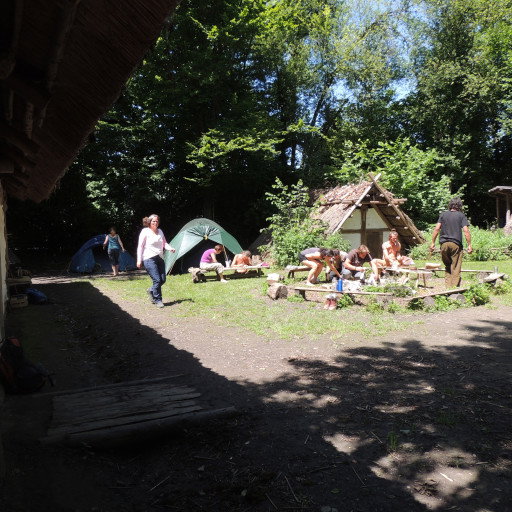
The modules take place mainly at the forest camp at Messersbacherhof, which was set up at the edge of the forest on our private property in the Donnersberg district. The camp is simply equipped, with a covered fire pit, outdoor kitchen and washing-up area, basic sanitary facilities (composting toilet-diversion toilets, forest bathroom), a tipi and other alternative shelters that you can try out as places to sleep. You are welcome to bring your own tent, tarp or hammock, as well as a sleeping bag and sleeping mat. Our participants love our site, which is constantly changing and has served for many years as a meeting place and a place to live and learn for children, young people and adults. We see ourselves as guardians of this place and ask that you treat our natural grounds with care.
Would you like to get some basic equipment but don’t know much about it yet? We’d be happy to advise you! Please get in touch with us! info@wildnisschule-donnersberg.de or 0174 2537443
Meals are prepared—with some help from participants—and consist predominantly of certified organic, regional and seasonal foods. We prepare vegetarian or vegan meals, adding local wild herbs, garden herbs and vegetables. We take great pleasure in surprising the groups from time to time with old traditional recipes from the region.
Certificate
At the end of the training, you will receive a certificate documenting your actual attendance at the modules, as well as the internships and projects you have completed.
If you have missed more than one module, you will receive only a confirmation of attendance for the modules you attended.
Missed modules can be made up in the courses offered the following year.
The certificate/confirmation of attendance will then be amended accordingly.
Cost Structure
€2,100–€2,500 (based on self-assessment), payable in installments of at least €350 each
plus costs for UVP, payable on site: €90 per module
Reviews
WildNet.Earth Review Policy
Each rating result ranges from 1 to 10. The overall rating for a class is calculated by adding up all the ratings submitted and dividing them by the number of ratings. We use a weighted system: more recent ratings have a greater influence on the overall result.
Participants can also submit sub-ratings for important class areas – such as organizer communication, class management, content & learning progress, procedure & implementation, venue, catering, and accommodation. Sub-ratings and overall ratings are assigned independently of each other and are not necessarily directly related.
Participants can submit a review if they have taken part in a class via WildNet.Earth – even if they have not completed the class in full. In addition, participants can verify themselves and also write reviews even if they have not booked via WildNet.Earth. Changes to reviews that have already been submitted can only be made via WildNet customer service.
To prevent bias, WildNet.Earth uses processes that identify fake or unreliable reviews. Such content will be deleted and measures may be taken against those responsible. Suspicious posts can be reported to customer service by anyone at any time.
We publish both positive and negative reviews, unless they contain or refer to:
- Politically sensitive content
- Advertising
- Illegal activities
- Personal or sensitive data (e.g., phone numbers, email addresses)
- Insults, obscene language, sexualized content, hate speech, discrimination, threats, or violence
- Spam or obviously fake content
- Identity theft
- Any violation of our rating guidelines
Guidelines and standards for reviews
These guidelines ensure that reviews on WildNet.Earth remain relevant, fair, and respectful—without restricting freedom of expression.
Contributions should have a clear connection to the class or experience and help other participants make an informed decision. Personal attacks, religious or political statements, advertising, or support requests (to the organizer or WildNet.Earth) do not belong in reviews and will be removed.
Posts must be suitable for a global audience. Obscenities (even in creative writing) and content that contains hate, discrimination, violence, sexual depictions, or illegal activities are not permitted.
All content must be authentic, independent, and unbiased. Organizers and their partners may not create reviews on behalf of their participants or offer incentives for reviews. Attempts at manipulation (e.g., negative reviews against other organizers) will not be tolerated.
Personal data of third parties may not be published. Copyrights must be observed—published content, especially images, may only be used if the corresponding rights have been obtained.
The opinions expressed are solely those of participants and class providers. WildNet.Earth accepts no liability for reviews or responses. WildNet.Earth acts as a distributor, not as a publisher of content.
Reviews are sorted according to recency and other relevance criteria (e.g., language, reviews with text, etc.). Additional sorting options may be available.
Wildnispädagogik & Lebenspädagogik Teil I
Rate your experience
Thank you for sharing your experiences. Your feedback helps other participants and supports the organizers in quality assurance.
A quick login is required to submit a review.
This ensures that only actual participants submit reviews, which increases the relevance of the reviews.
Similar classes in this category





About the Organizer
Wildnisschule am Donnersberg e.V.
Our program is for people of all ages who want to take the path of wilderness and experience nature. We accompany children, young people, adults, families, sports teams, company teams, school classes, and other existing groups through holiday camps, wilderness days, survival workshops, nature crafts courses, forest vision quests in the Central European tradition, walkaways, seasonal festivals, and more. We provide them with the “right tools” to become rooted and connected once again, fully in and with nature.
Let’s get started on a new round!
WILDERNESS EDUCATION AND LIFE EDUCATION: This training is intended for people in educational professions, teaching roles, natural sciences and forestry, or anyone who would like to develop further through a sustainable, holistic way of living in and with nature.
In a mindful and respectful way, it combines the wilderness knowledge of Indigenous peoples from around the world with European traditions and ways of life.
Enjoy browsing our program!
Warm regards,
The Wildnisschule-am-Donnersberg team
Unser Programm richtet sich an Menschen aller Altersstufen, die den Weg der Wildnis wagen und Natur erleben wollen. Wir begleiten in Feriencamps, Wildnistagen, Survival- Workshops, Natur- Handwerks- Kursen, Wald-Visionssuchen nach mitteleuropäischer Tradition, Walkaways, Jahreskreisfesten …, Kinder, Jugendliche, Erwachsene, Familien, Sport-Teams, Firmen-Teams, Schulklassen oder andere bestehende Gruppen. Bei uns erhalten sie das „richtige Handwerkszeug“, um wieder ganz in und mit der Natur verwurzelt und verbunden zu sein.
Auf geht`s in eine neue Runde!
WILDNISPÄDAGOGIK UND LEBENSPÄDAGOGIK: Diese Ausbildung richtet sich an Menschen in pädagogischen Berufen, in unterrichtenden Tätigkeiten, aus naturwissenschaftlichen und forstlichen Bereichen oder an Menschen, die sich durch eine nachhaltige und ganzheitliche Lebensweise in und mit der Natur weiterentwickeln möchten.
Sie verknüpft auf achtsame und respektvolle Art das Wildniswissen indigener Völker aus der ganzen Welt mit europäischen Traditionen und Lebensweisen.
Viel Spaß beim Durchstöbern unseres Programms!
Herzlichst,
das Wildnisschule-am-Donnersberg-Team
Hundreds more classes in 30+ categories
Not found what you are looking for yet? Discover many more classes in our class finder.