Coyote Teaching and Track Identification

A mentoring offering by Wildnisschule Chiemgau

Verified Organizer

WildNet checks this provider’s details so you can better understand who is hosting the class.

There are currently no upcoming dates for this class.

Other current classes from this provider

9.0 1 review
For Adults

About this Class

Some info was translated automatically.

Why is learning so successful among indigenous peoples, and how can I spark curiosity in children and adults? 

You’ll get a behind-the-scenes look at teaching as it was and still is practiced by indigenous peoples around the world. You’ll learn the art of asking questions – CoyoteTeaching; discover how peace and harmony are possible in a group; and learn techniques for resolving conflicts. Together, we’ll explore “Cultural Mentoring,” a culture of nonviolent communication that creates peace. In practice, we’ll apply CoyoteTeaching to tracking. Over the weekend, you’ll also learn about mammals and immerse yourself in the art of tracking. You’ll learn the basics of interpreting animal tracks. In some cases, it’s even possible to draw conclusions about the speed at which an animal was moving. These signs are universal. They can be interpreted just as well on your doorstep as in the desert or the jungle. Only the names of the suspects are different.

This course is a module of the Wilderness Education training program and can also be booked individually!


Available dates

There are currently no upcoming dates for this class. However, you can express your interest in future events by putting yourself on the waiting list.

Contents

The secret of the “art of teaching” is revealed

“The knowing is in the doing!” (Knowledge comes from doing!)” Mala Spotted Eagle

This statement sounds so banal, but it is the only way to acquire knowledge that can be stored in the brain for the long term. And a strong “carrier wave” is essential for this. Outdoors, this essential element is always present. And without questions, there are no answers. Those who are not curious do not want to know anything. And so they neither want nor will they come to know. Most questions arise during walks in nature, when we are out and about with attentive eyes. As “Coyote teachers,” we draw attention to signs on trees and shrubs, tracks in the grass and in the earth, and ask questions. In this way, we automatically immerse ourselves in the art of tracking (tracking). After the walk, the conditions are in place for you, as a participant, to take in the basics of interpreting animal tracks. This fascinating detective work can go so far that you can tell which direction the animal went, how big it was, and sometimes even whether the track was left by a male or a female. This knowledge can be applied to all mammals, whether they are animals on your doorstep, in the desert, or in the jungle. Only the names of the suspects are different. Experiences in nature outdoors can also serve as a mirror for you and trigger processes within you. We call this InnerTracking. We would be happy to support you as best we can on this journey toward yourself.


Structure

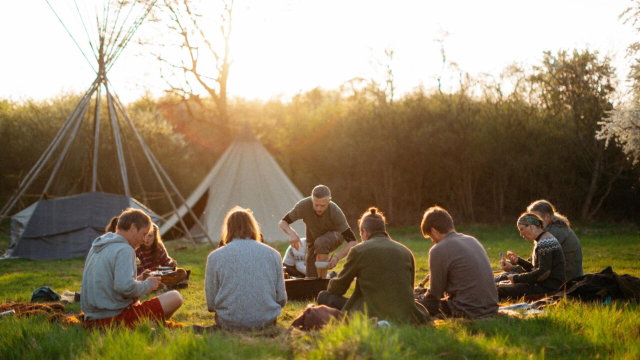
The course is part of the Wilderness Education training. You will be warmly welcomed into the circle.

Prerequisites

  • Over 18 years old.

  • No prior knowledge required.

  • Dogs must stay at home during this time.

Packing List

Clothing:

You don’t need expensive clothing from a brand-name outdoor outfitter. Army surplus stores have very inexpensive items that are generally hard-wearing. Camouflage isn’t necessary, though it can be hard to avoid there. Trousers with side pockets are practical, as is a belt for knives, etc.

In damp, cold weather we now mostly wear wool clothing (e.g. wool-silk underwear, boiled wool or loden fabrics).

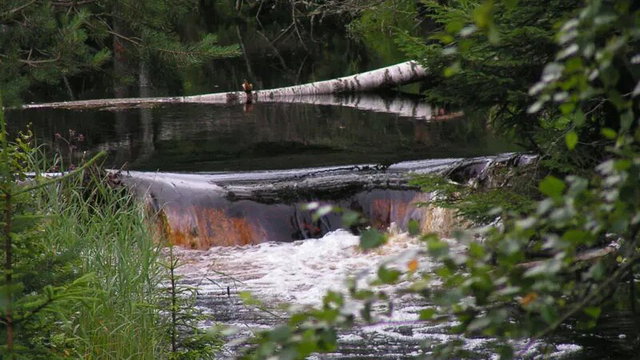
When planning, think in terms of layers, so that around midday you can take off as many as needed and put a few layers back on in the evening when it gets cooler. We are on the north slope of the Wendelstein, beside a mountain stream, so it is always a little cooler in the evenings and mornings.

We are outdoors in all weather and have regular opportunities to warm up by the fire.

  • Two complete changes of clothes in case everything gets wet (nothing can be dried). Please bring only things that can get dirty or damaged.

  • Warm sweater!!! (Fleece clothing quickly gets holes around the campfire!), long, warm socks or leg warmers.

  • Thermal underwear (or other long underwear) doesn’t take up much space, but can make a big difference to your comfort in rainy weather.

  • Rain gear from head to toe, so your layers underneath stay dry. Jacket with a hood. Test it beforehand if you haven’t used it before. A rain poncho is impractical when handling things around the fire.

  • If buying new gear, make sure the cuffs fit snugly around your wrists with Velcro or elastic, and that the hood has a brim; otherwise, wear an inexpensive baseball cap underneath.

  • Long rain pants with side zippers are practical, so you can get them on over thick shoes (try them on).

  • Rubber boots or other shoes that are warm and waterproof.

  • A hat, as it can get cold in the evening. A brimmed hat, if you have one.

  • A scarf or blindfold, which we will need for exercises.

Miscellaneous:

  • Tableware: deep plates and cutlery, large mug

  • Your own quick-drying towel with your name or a mark to identify it

  • Water bottle (please put your name on it). It can also be used as a hot-water bottle and bring a thermos for your drinks between meals!

  • Sitting pad (a small foam mat to sit on or something similar, with your name or an identifying mark on it).

  • Daypack for everyday items.

  • Flashlight (can also be bought at camp for €10)

  • Fixed-blade knife (can also be bought at camp for €25)

  • Watch/alarm clock. Attention: There is no electricity!! Therefore, no electrical devices, mobile phones, etc. can be charged.

  • Tent and possibly a tarp for rain cover if your tent is not 100% waterproof. A tarp can also be set up on the tent meadow.

  • Sleeping bag (warm). If you only have a lightweight summer sleeping bag, bring an extra blanket to put inside the sleeping bag. Using a second sleeping bag inside the first is another possible solution.

  • Sleeping pad (foam mat). Bring the thickest one and make yourself comfortable!

  • Please use only biodegradable soap. Ask at the drugstore. We wash with it beside the stream. No soap or toothpaste should get into the water; use it beside the stream instead. Warm water can be prepared in a bowl.

  • Swimsuit or swim trunks in case you want to go in the stream.

  • Special food items, if you need them, or snacks. Meals will be vegetarian. If you are vegan, please let us know.

  • Bring sweets for yourself if you need them.

  • Special drinks: Coffee, tea, milk and oat drink are provided. If you prefer other drinks, please bring enough for yourself.

  • If you have a good hatchet or saw, bring it along (put your identifying mark on it).

  • Musical instruments (drum, shaker, guitar, flute…)

Writing materials:

  • A4 or A5 notepad with a firm cover, so you can write on it comfortably in any position.

  • Pencil and eraser

  • Colored pencils, if available

Note:

  • No alcohol or drugs at the site, please.
    We will transport your luggage in a trailer from the parking lot to camp. Please pack it securely and keep the number of separate items to a minimum! If you have several small bags, please put everything together in one large trash bag and write your name on it. You should be able to carry it easily across the stream. At the end, your luggage will be transported back to the parking lot.


Board & Overnight

A substantial breakfast and two hot meals are provided

Please contact us if you have any food intolerances.

Overnight stay in your own tent

Certificate

Certificate of attendance upon request

Cost Structure

The cost includes full board and an overnight stay in your own tent, as well as all ancillary costs.

The booking fee of €40 is non-refundable in the event of cancellation.

Reviews

Based on 1 experience shared by

Food 10
Organizer Communication 8.8
Instructors 10
Event location 10
Overnight stay 10
Content & learning 10
Procedure & implementation 9.5

More classes from this school

Similar classes in the Mentoring category

About the Organizer

Wildnisschule Chiemgau

Verified Organizer Founded: 2005 540+ happy participants
Logo of the wilderness school Wildnisschule Chiemgau
Some info was translated automatically.

When people of all ages and from all professions are happy to come back, then we’re doing something right. Our offerings are wide-ranging. They cover everything from wilderness survival skills and crafts to personal potential development.
Dirk’s experience from his visits to Indigenous cultures on different continents confirms the knowledge that has come to us through Stalking Wolf via Tom Brown Jr., his first student Jon Young, and others.
We support YOU in finding your roots by reconnecting with nature—connection with nature is healing.

Our philosophy

With our modern technology, we have moved far away from nature, and thus from ourselves. Our aim is to reconnect people with nature through our offerings and thereby awaken the vitality and potential of each individual. Our team consists of wilderness educators and has now grown into a broad network. Some of them now offer their own courses.
We present all of this on this website.
Wildnisschule-Chiemgau was founded by Dirk Schröder in 2005 and later converted into an association. Since then, various areas have been added—Wildnis2Go, our mobile division; Unity-in-Peace, the PeaceMakers Academy; and Elementar-Erfahrungen, our offerings for personal potential development.

Togetherness is the way forward

With this in mind, we are building a large, growing network of trained wilderness educators with a vision: to bring wilderness knowledge to every kindergarten, every school, every business, and every family.

“I know nature, I know the paths. I know where I’m going. I can never really get lost.”
Says Tippi Degré (10 years old). She grew up in Namibia with the San (Bushmen) and Himba.

Life in the open air, direct contact with nature, and the knowledge of Indigenous peoples draw people of all generations to us in the Chiemgau region, from far beyond the borders of Bavaria. Together, we are creating a new cultural space based on time-tested values. It is the foundation for peaceful coexistence—strong networks of peace.

Many elements of our approach to education come from the millennia-old practices of traditional cultures:

  • Natural learning across generations

  • Being together—circle culture

  • Experiencing powerful rituals

  • Core routines as “tools” for everyday life

  • The PeaceMakers principles as a foundation for peace

At the heart of our approach to education is:

  • Coyote teaching, as we call the traditional way of supporting people as they grow.
    As mentors, we guide attention, spark curiosity, support course participants’ interests, and deepen their learning through an unobtrusive presence.

“Learning happens this way ‘on the side,’ almost unnoticed.”
Dirk Schröder

What is natural learning?

Neurobiologist Dr. Gerald Hüther and other scientists have long confirmed that joyful curiosity and the opportunity to experience things for oneself are prerequisites for learned material to be stored long term. Learning happens this way as a natural part of the experience. Among other things, our role as mentors is to spark participants’ curiosity and ensure that the peaceful atmosphere in camp is maintained with plenty of joy.

Circle culture and PeaceMakers principles as a foundation

We live the way of the circle, making respectful, appreciative interaction tangible again. This has always been the foundation that supports us securely. The Lipan Apache Manitonquat and his wife Elika spent many years reminding people of this ancient knowledge in their courses—knowledge that was also practiced here in Europe.

The essential elements of circle culture are:
  • Speaking truthfully

  • Listening with empathy

  • Letting one another finish speaking

  • Holding what is shared with respect

  • Rather than being delegated from above, tasks are brought to the circle

  • Finding and implementing the best possible solution together

Learn more in the conversation with Robert Förg, a participant in the first wilderness education training program. He introduced these simple principles to his team and improved its efficiency. Stefan Gaffner, another participant, put them into practice with his employees at the bank. You can find the conversations on our YouTube channel.

The PeaceMakers principles were passed on to us by the Haudenosaunee (Iroquois):
  1. Everyone has a fundamental right to peace

  2. I speak my best words

  3. Make decisions by consensus / Unity

We explicitly explore the following topics for the present day:

  • Respecting, maintaining, and setting boundaries

  • Health for body, mind, and spirit

Wenn Menschen jeden Alters und jeder Berufssparte gerne wiederkommen, dann machen wir etwas richtig. Unsere Angebote sind breit gefächert. Sie bieten von den Überlebenstechniken in der Natur, dem Handwerk bis zur Potentialentfaltung ein breites Specktrum.
Dirks Erfahrung von seinen Besuchen bei Nativen Kulturen auf verschiedenen Kontinenten bestätigen das Wissen, welches durch Stalking Wolf über Tom Brown jr., seinem 1. Schüler Jon Young und weiteren zu uns gekommen ist.
Wir unterstützen DICH darin, dass Du Deine Wurzeln findest, in der Rückverbindung mit der Natur - Naturverbindung ist Heilung.

Unsere Philosophie

Durch unsere moderne Technik haben wir uns weit davon entfernt und damit auch von uns. Unser Anliegen ist es, dass wir Menschen mit unseren Angeboten wieder mit der Natur verbinden und damit die Lebendigkeit und das Potenzial jedes Einzelnen wecken. Unser Team besteht aus Wildnispädagogen*innen und bildet inzwischen ein weites Netzwerk. Einige bieten inzwischen ihre eigene Kurse an.
All dies stellen wir auf dieser Internetseite vor.
Die Wildnisschule-Chiemgau wurde 2005 von Dirk Schröder gegründet und später in einen Verein umgewandelt. Seitdem sind verschiedene Bereiche hinzu gekommen – Wildnis2Go, unser mobiler Bereich – Unity-in-Peace, die FriedensStifter Akademie – Elementar-Erfahrungen, unsere Angebote für Potenzialentfaltung.

Miteinander ist der neue Weg

In dem Sinne bilden wir ein großes wachsendes Netzwerk der ausgebildeten Wildnispädagog/innen mit der Vision: wir tragen das Wildniswissen in jeden Kindergarten, jede Schule, jedes Unternehmen, in jede Familie.

“Ich kenne die Natur, ich kenne die Wege. Ich weiß, wohin ich gehe. Ich kann mich wirklich niemals verlaufen.”
Sagt Tippi Degré (10 Jahre). Sie ist in Namibia mit den San (Buschleuten) und Himba aufgewachsen.

Das Leben unter freiem Himmel, der direkte Kontakt mit der Natur und das Wissen der Naturvölker locken Menschen aller Generationen auch weit über die Grenzen Bayerns hinaus zu uns ins Chiemgau. Wir kreieren zusammen einen neuen Kulturraum, der auf alt bewährten Werten beruht. Es ist die Basis für ein friedvolles Miteinander - tragfähige Netzwerke des Friedens.

Viele Elemente unserer Pädagogik entstammen der Jahrtausende alten Praxis ursprünglicher Kulturen:

  • Generationen übergreifendes natürliches Lernen

  • Im Miteinander sein – Kreiskultur

  • kraftvolle Rituale erleben

  • Kernroutinen als “Werkzeuge” für den Alltag

  • Die FriedensStifter-Prinzipien als Basis für Frieden

Im Mittelpunkt unserer Pädagogik steht:

  • das Coyoteteaching, wie wir die ursprüngliche Art Menschen im Wachsen zu unterstützen, bezeichnen.
    Als Mentoren lenken wir die Aufmerksamkeit, wecken Neugierde, unterstützen die Interessen der Kursteilnehmer/innen und vertiefen das durch unsichtbares Begleiten.

"Lernen findet auf diese Weise „nebenbei“, fast unbemerkt statt."
Dirk Schröder

Was ist natürliches Lernen?

Der Neurobiologe Dr. Gerald Hüther und andere Wissenschaftler haben längst bestätigt, dass freudvolle Neugierde und die Möglichkeit, Dinge selbst zu erfahren, die Voraussetzung dafür sind, dass das Erlernte langfristig abgespeichert wird. Lernen geschieht auf diese Weise nebenbei. Unsere Aufgabe als Mentor/innen ist es unter anderem, Neugierde bei den Teilnehmer/innen zu wecken und darauf zu achten, dass die friedvolle Atmosphäre im Camp mit viel Freude erhalten bleibt.

Kreiskultur und FriedensStifter-Prinzipen als Basis

Wir leben den Weg des Kreises und machen damit ein respektvolles, wertschätzendes Miteinander wieder erfahrbar. Dies war immer schon die Basis, die uns sicher trägt. Der Lipan Apache Manitonquat und seine Frau Elika haben über viele Jahre in ihren Kursen an dieses alte Wissen erinnert, welches auch hier bei uns in Europa gelebt wurde.

Die wesentlichen Elemente der Kreiskultur sind:
  • Wahres Sprechen

  • Empathisch Hinhören

  • Einander Ausreden lassen

  • Gesprochenens respektvoll hüten

  • Aufgaben werden statt von oben delegiert, in den Kreis gegeben

  • Die bestmögliche Lösung wird gemeinsam gefunden und umgesetzt

Mehr dazu im Gespräch mit Robert Förg, einem Teilnehmer aus der ersten Ausbildung Wildnispädagogik. Er hat diese einfachen Prinzipien in seinem Team eingeführt und die Effizienz verbessert. Stefan Gaffner, ein anderer Teilnehmer, hat diese bei seinen Mitarbeitern in der Bank umgesetzt. Du findest die Gespräche auf unserem YouTube Kanal.

Die FriedensStifter-Prinzipien wurde uns von den Haudenosaunee (Irokesen) übertragen:
  1. Jeder hat ein Grundrecht auf Frieden

  2. Ich spreche meine besten Worte

  3. Treffe Entscheidungen in Einigkeit / Unity

Wir vertiefen explizit folgende Themen für die heutige Zeit:

  • Grenzen respektieren, hüten, setzen

  • Gesundheit für Körper, Geist und Seele

Hundreds more classes in 30+ categories

Not found what you are looking for yet? Discover many more classes in our class finder.

Dates

Dates

No upcoming dates Price
Choose a date
Report a review
What is wrong with this review? Tell us why this review is inaccurate, offensive, or should be taken down. Add details that help us verify. Email
Optional: Provide your contact details if you wish to be contacted regarding your complaint.
Phone
Optional: Provide your contact details if you wish to be contacted regarding your complaint.